
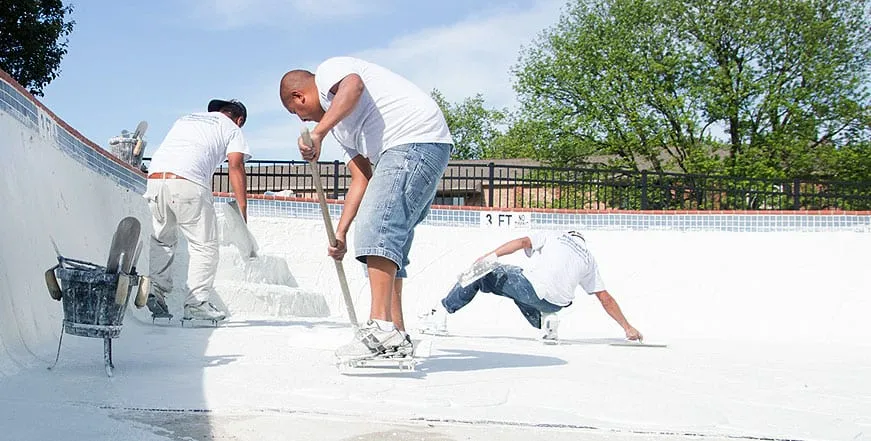
Plaster, quartz or pebble: pick a surface that lasts
A pool floor and walls that are no longer stained or rough: plaster, quartz or pebble surfaces repaired or replaced. Montgomery and Chester Counties.
A pool that is no longer stained or rough, on a surface you chose for how long it lasts and what it costs. August Pool & Spa repairs and replaces plaster, quartz and pebble pool surfaces across Montgomery and Chester Counties, and we look at your pool first to say whether it needs a repair or a full replacement.
- Surfaces
- Plaster, quartz, pebble
- Plaster life
- 7 to 10 years with proper care
- Quartz life
- 10 to 15 years; costs about 50% more than plaster
- Pebble life
- 12 to 20 years; costs about double plaster
- Where
- Montgomery and Chester Counties, PA
Pool Surface Repair, in plain terms.
You leave with a pool floor and walls that are no longer stained or rough, on a surface you picked on purpose. If your surface is stained or rough, we look at it in person and tell you whether a repair or a full replacement fits. Three surfaces are common: plaster, quartz and pebble. Quartz and pebble were developed to fix the shortcomings of plaster. They do, but neither is perfect, and both cost more. Here is how they compare.
Plaster is still the most common pool surface, and it is the least expensive of the three. Most traditional plaster is white cement mixed with limestone or marble sand. It is familiar, which is why people choose it.
Plaster has limits. It is porous, which means it soaks things up, and it is the most likely of the three to stain, grow bacteria and break down from the chemicals you add. Because plaster reacts constantly with the water, plaster pools use more chemicals to stay balanced. Expect 7 to 10 years of good service from new plaster with proper care.
Quartz is plaster with crushed quartz stone mixed in. Quartz is far harder than the marble sand it replaces. A hard, non-porous, stain-resistant material across part of the surface gives you a surface that resists stains and lasts longer than plaster alone. You can also add color. Expect 10 to 15 years of good service. It costs about 50% more than plaster.
Pebble is the most stain-resistant and most durable surface available, and it comes in many colors. The trade-off is texture. Pebble is rough, so it is harder on feet and harder on automatic pool cleaners, because parts that touch the surface wear out faster. A mini pebble surface uses smaller pebbles and is polished smooth. Expect 12 to 20 years of good service. It costs about double what plaster costs.
If your pool is stained, rough or has a surface that is wearing out, talk to us before you choose. Customers have called us to drain and acid wash a pool (treat the surface with acid to strip off stains and buildup) that had sat unopened for years, then found it also needed replastering. We can tell you whether the surface needs repair or replacement.
Your choice comes down to a few plain questions. How long do you want it to last? How much do you want to spend now? Do you want color? Do you mind a rougher texture? We help you answer them, and the result is a pool surface you chose on purpose.
For a full surface replacement or a bigger rebuild, see our pool renovations page.
How it goes.
- Tell us about the pool Use the form or call (267) 280-3657 and describe the surface and what you see.
- We look at the surface Most estimates need a site visit so we can see the pool.
- You choose We compare repair against replacement, and plaster against quartz or pebble, with the trade-offs for your pool.
- We do the work We carry out the repair or replacement you chose.
Pool Surface Repair: questions people ask first.
What will it cost?
Estimates are free, and most need a site visit. Quartz costs about 50% more than traditional plaster, and pebble costs about double what plaster costs. We give you the estimate before work starts.
Which surface lasts longest?
Plaster lasts 7 to 10 years with proper care. Quartz lasts 10 to 15 years. Pebble lasts 12 to 20 years. All three depend on care and water balance. The longer-lasting surfaces cost more up front.
Is pebble rough on feet?
Standard pebble is a rough surface, and it is harder on feet and on automatic pool cleaners. A mini pebble surface uses smaller pebbles and is polished smooth.
Why does plaster need so many chemicals?
Plaster is porous (it soaks things up) and reacts constantly with the water and the chemicals you add. That is why plaster pools use more chemicals to keep the water balanced.
Can my surface be repaired, or does it need replacing?
We look at it in person and tell you. A stained or rough surface may only need repair, and one near the end of its life may need replacing.
Do you also handle a full renovation?
Yes. Re-plastering, remodels and upgrades for older pools are part of our pool renovations service, with a detailed estimate first. Estimates are free, and most need a site visit so we can see the pool.
Where we do it.
Pool Surface Repair is available across Montgomery and Chester Counties. These towns have their own pages, with local pool permit and fence rules.
Often booked with this.
Tell us what the pool is doing.
Send a request or call the shop. Estimates are free; most need a site visit.